 Ελληνικά
But what exactly does Phimosis mean?
Phimosis is a congenital abnormality in boys, while in adult men it is often due to inflammatory diseases (recurring balanitis), in synergy with systemic diseases (diabetes mellitus), as well as poor hygiene.
It is the inability to reveal the glans (the head of the penis), due to the formation of a ring on the skin (foreskin) that surrounds it. Therefore, the skin surrounding the glans cannot be pulled back, or when this is done in a relatively violent way then it is not possible to return to its place, a condition called paraphimosis that can create necrosis of the skin of the penis and therefore must be treated immediately.
At what age does phimosis occur?
Phimosis can occur at any age, but in boys under three years of age true phimosis is rarely observed and the relatively narrow ring of the foreskin gradually widens so that at older ages the glans can be revealed naturally.
What problems does phimosis cause?
Phimosis is not a dangerous condition in children, except in certain cases.
Narrow ring on the skin of the penis
When the ring is so narrow that the skin completely covers the urethral orifice, urination can be prevented. For this reason, the main concern of parents — especially the mother, who has closer contact with the child's hygiene — is to monitor the child's urination to determine if it is normal (i.e., forming a radius curve) or if it is obstructed. If a mother notices any changes in urination or has any doubts, she should definitely consult her doctor.
Older medical views, which may still be encountered today, recommended daily retraction of the skin (foreskin) of the penis, believing it could mechanically enlarge the stenotic penile ring. However, this manipulation often causes minor injuries and ruptures of the skin around the ring. As the body heals these injuries, it can create scars that lead to further narrowing of the ring, potentially causing phimosis where there was none before.
If the skin surrounding the glans becomes red, if there is itching, or if purulent fluid is discharged from the penis, it is important to contact a doctor.
Frequent urinary tract infections
The second reason why phimosis can be dangerous is the association with recurrent urinary tract infections (UTIs). Several studies have produced conflicting results regarding whether phimosis contributes to the development of these infections. Some research suggests that phimosis may be a factor in male infants aged 3 to 6 months, while in older boys, it is generally considered unlikely to be the cause of recurrent UTIs. As such, the relationship between phimosis and urinary tract infections remains a topic of ongoing investigation.
When to Treat Phimosis
Immediate Treatment Required
- • Urinary Obstruction: If phimosis leads to difficulty urinating.
- • Recurrent Urinary Tract Infections: Especially in infants aged 3–6 months.
Postponement of Treatment
- • No Immediate Complications: If neither of the above issues is present, treatment can be delayed until the child is older and able to receive local anesthesia.
- • Underlying Conditions: If phimosis is secondary to inflammatory conditions like balanitis or systemic diseases such as diabetes, management of those conditions is necessary.
In Adults
Phimosis may impact sexual functioning (impotence) or fertility, adverse effects that may necessitate treatment.
How Phimosis is Treated
Surgical Intervention (Circumcision)
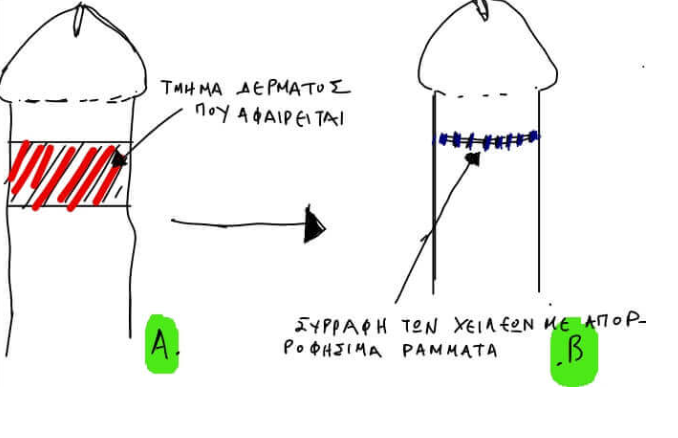
This is the standard treatment for phimosis. It involves the removal of the foreskin. It can be performed for medical reasons or, traditionally, for religious/cultural purposes in newborn boys.
Technical Aspects: The procedure is considered straightforward, generally performed under local anesthesia in older children and adult males, with absorbable stitches used.
Anesthesia
General anesthesia is typically avoided, especially in young children, to ensure safety. Local anesthesia is preferred, allowing for a quicker recovery.
Recovery
After circumcision, the patient is usually allowed to go home immediately or may stay in the facility for a maximum of one day. Complete wound healing typically occurs within 20 days.
Considerations
Differentiation from Short Frenulum: It's important to distinguish phimosis from a short frenulum, which can also cause pain during erections or intercourse and may require a different surgical approach.
In conclusion, treatment of phimosis should be carefully considered based on the individual situation of the patient, with urgent cases requiring prompt surgical intervention while non-urgent cases warrant observation and delayed treatment until the child is older.
Contents
Book an Appointment
Dr. Mertziotis specialises in the diagnosis and surgical treatment of phimosis, including circumcision under local anesthesia.
Book an Appointment Online +30 210 6465359